8b/10b
Every byte as 10 bits, balanced
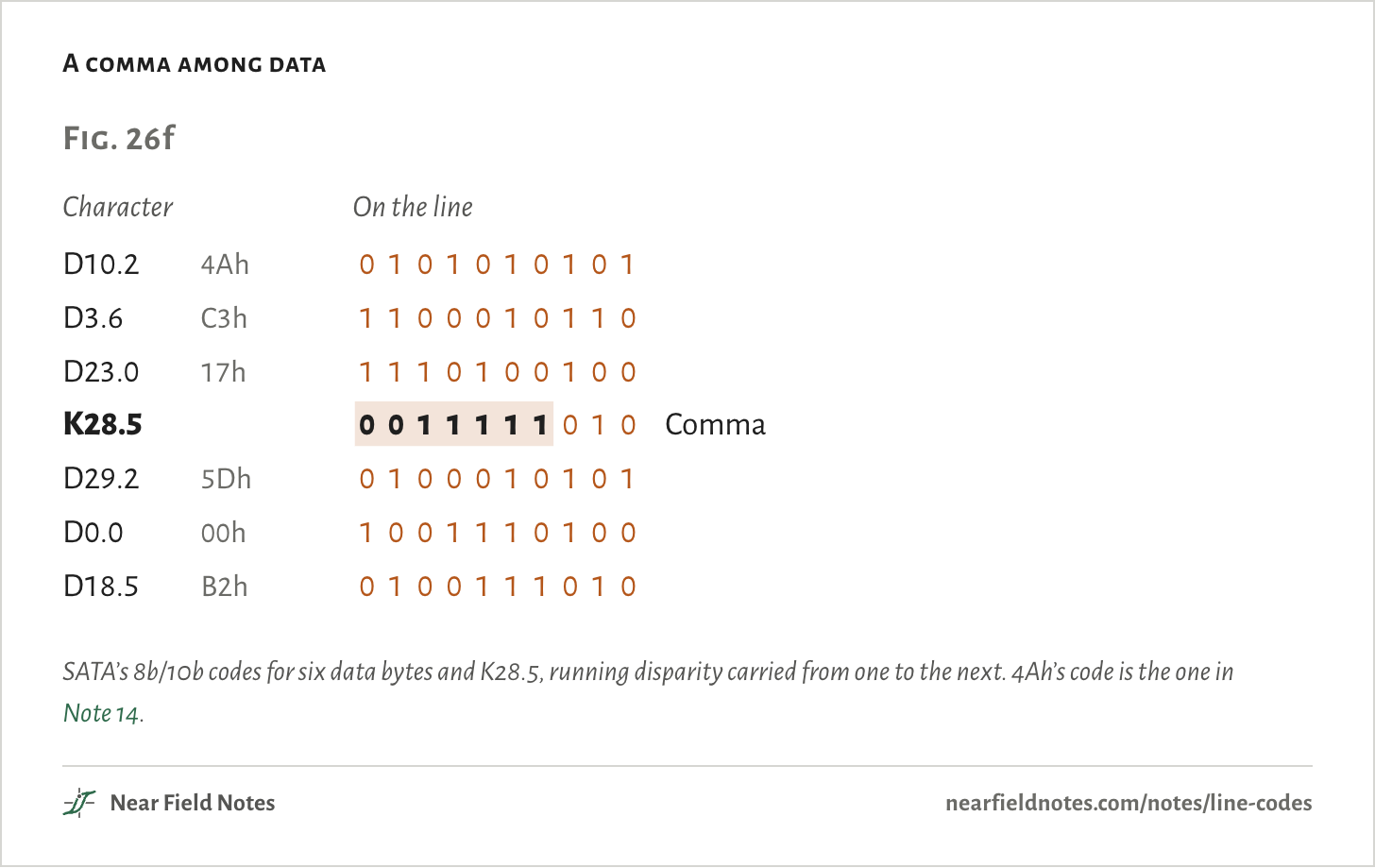
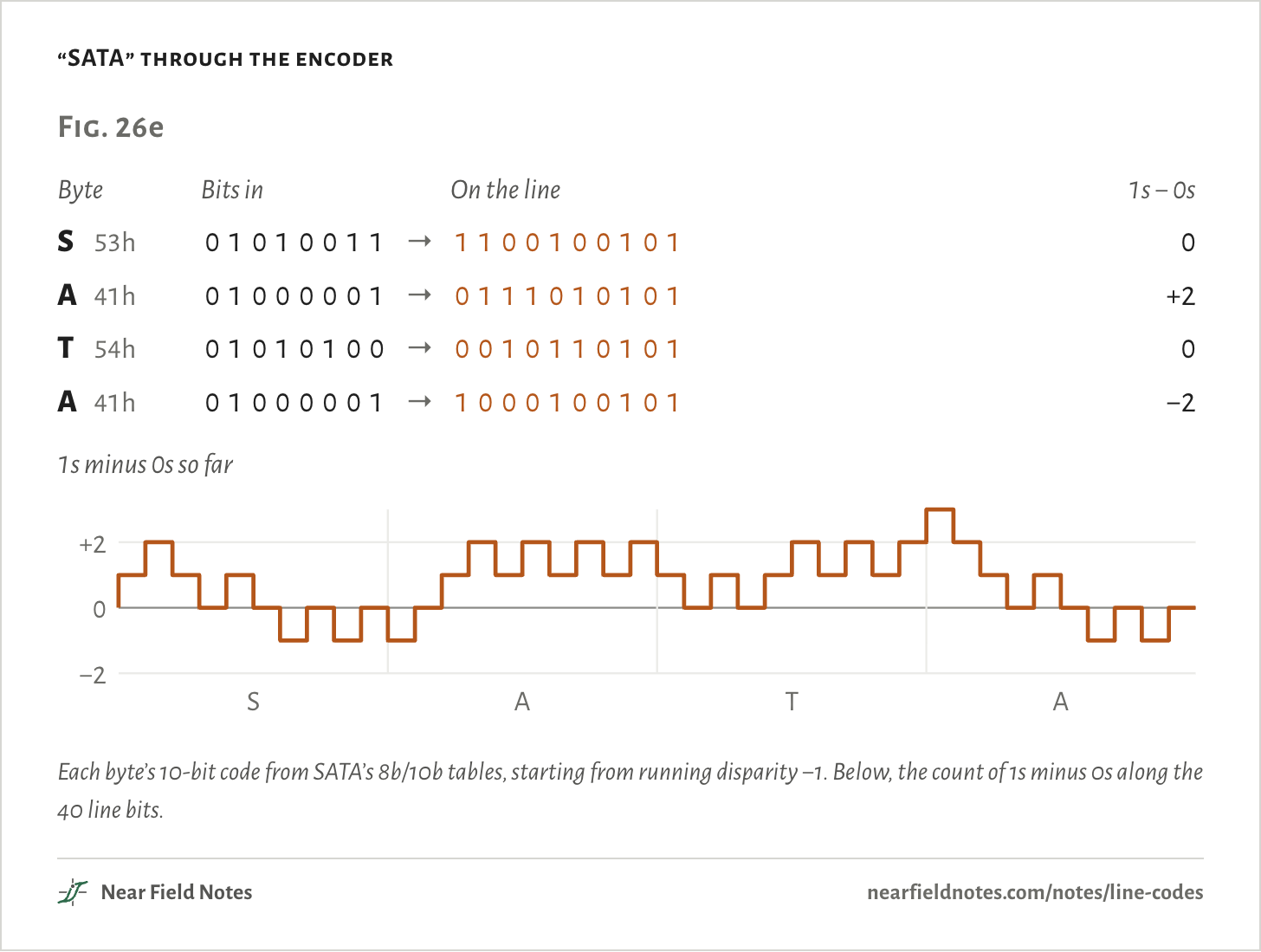
Field marks. Each code has five 1s and five 0s, or six of one and four of the other. A byte whose code is unbalanced has two codes, and the encoder picks the one that pulls the count of 1s minus 0s back toward zero. That running count is the running disparity. The two A’s in Fig. 26e go out as 0111010101 and 1000100101.
Look-alike. TMDS, the 8-to-10-bit code of DVI and HDMI. It also sends 10 bits a byte and keeps the line balanced, but it was built to cut the edges on a video lane, and those links send their clock on a pair of its own. Note 14 follows it.
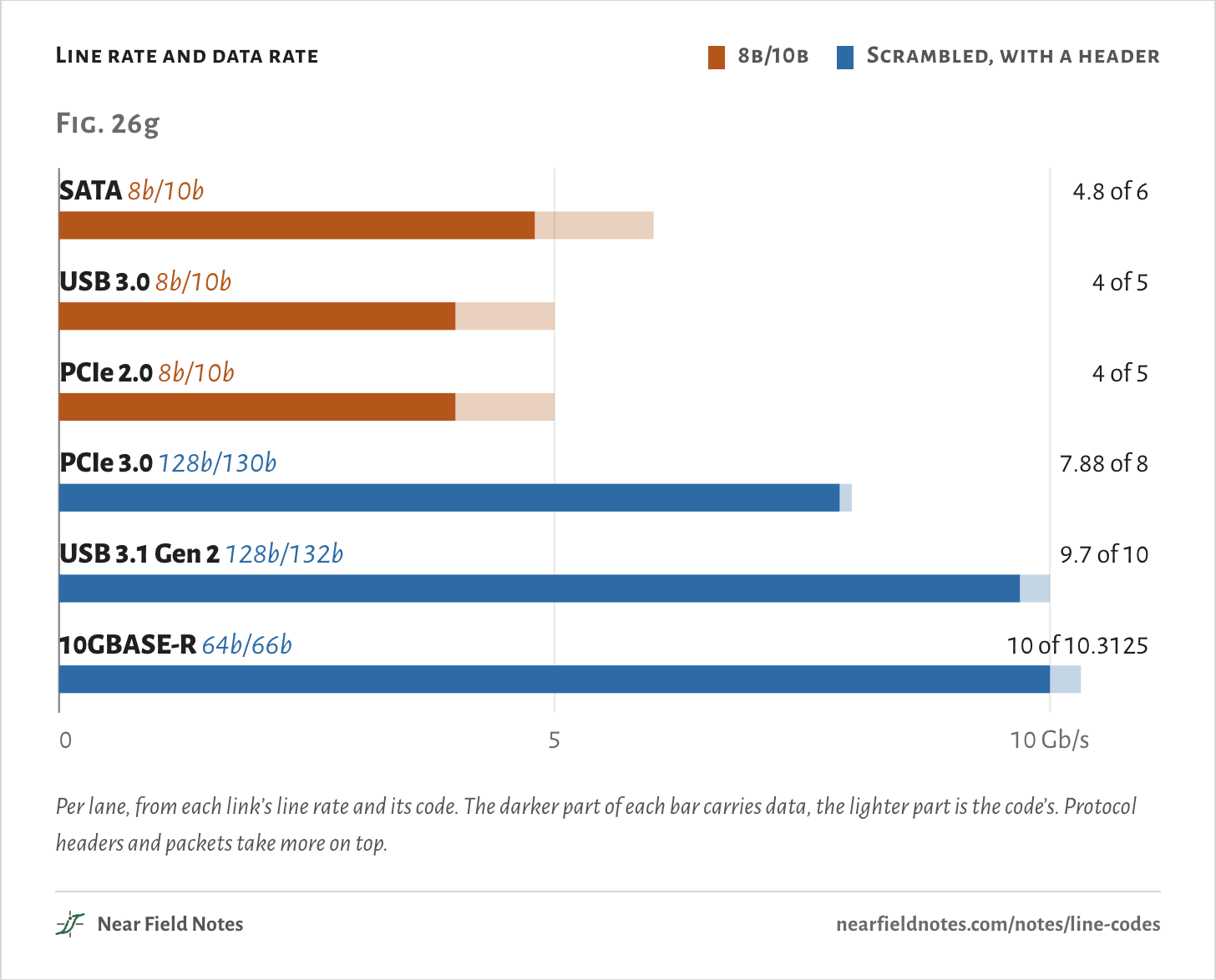
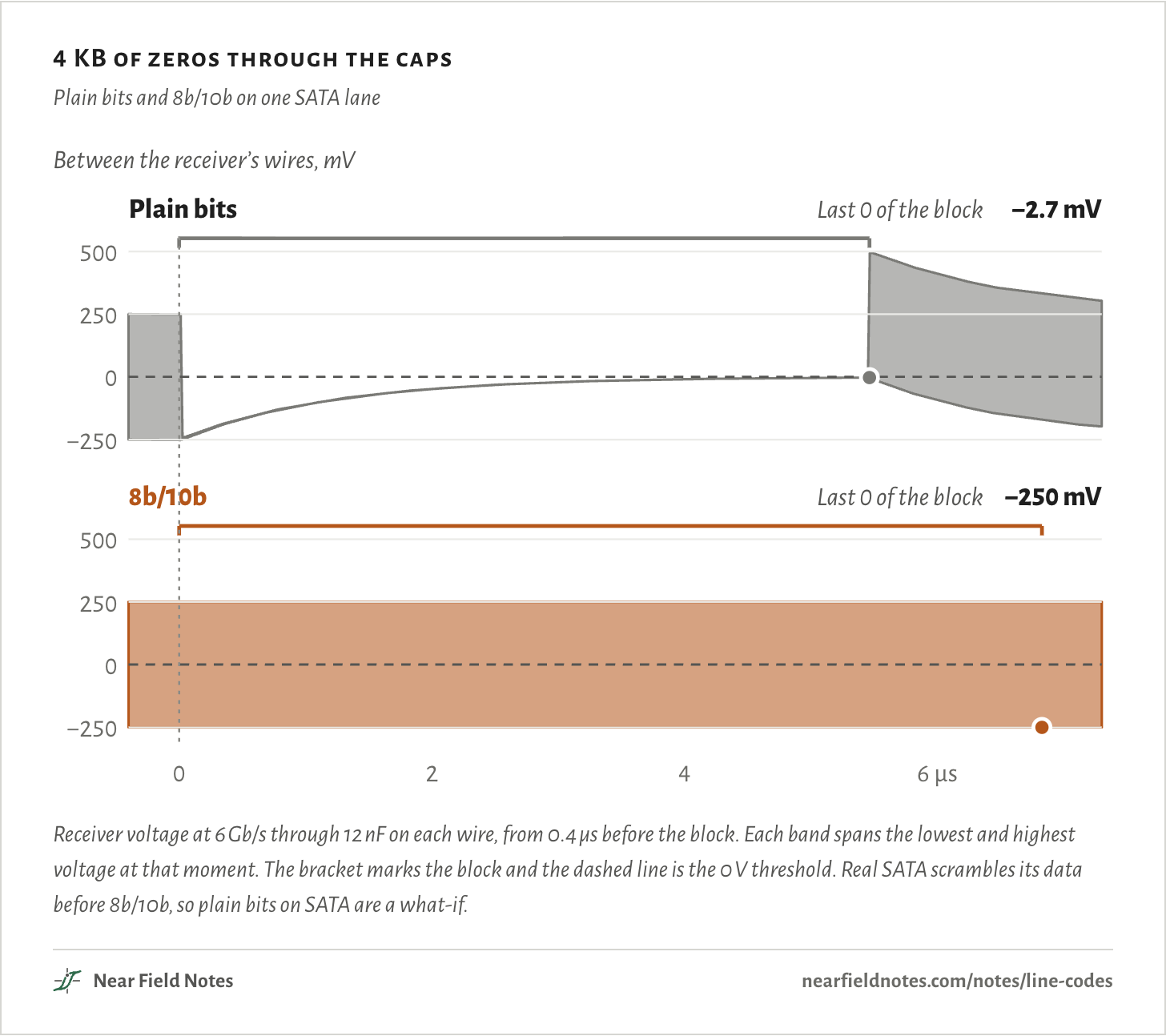
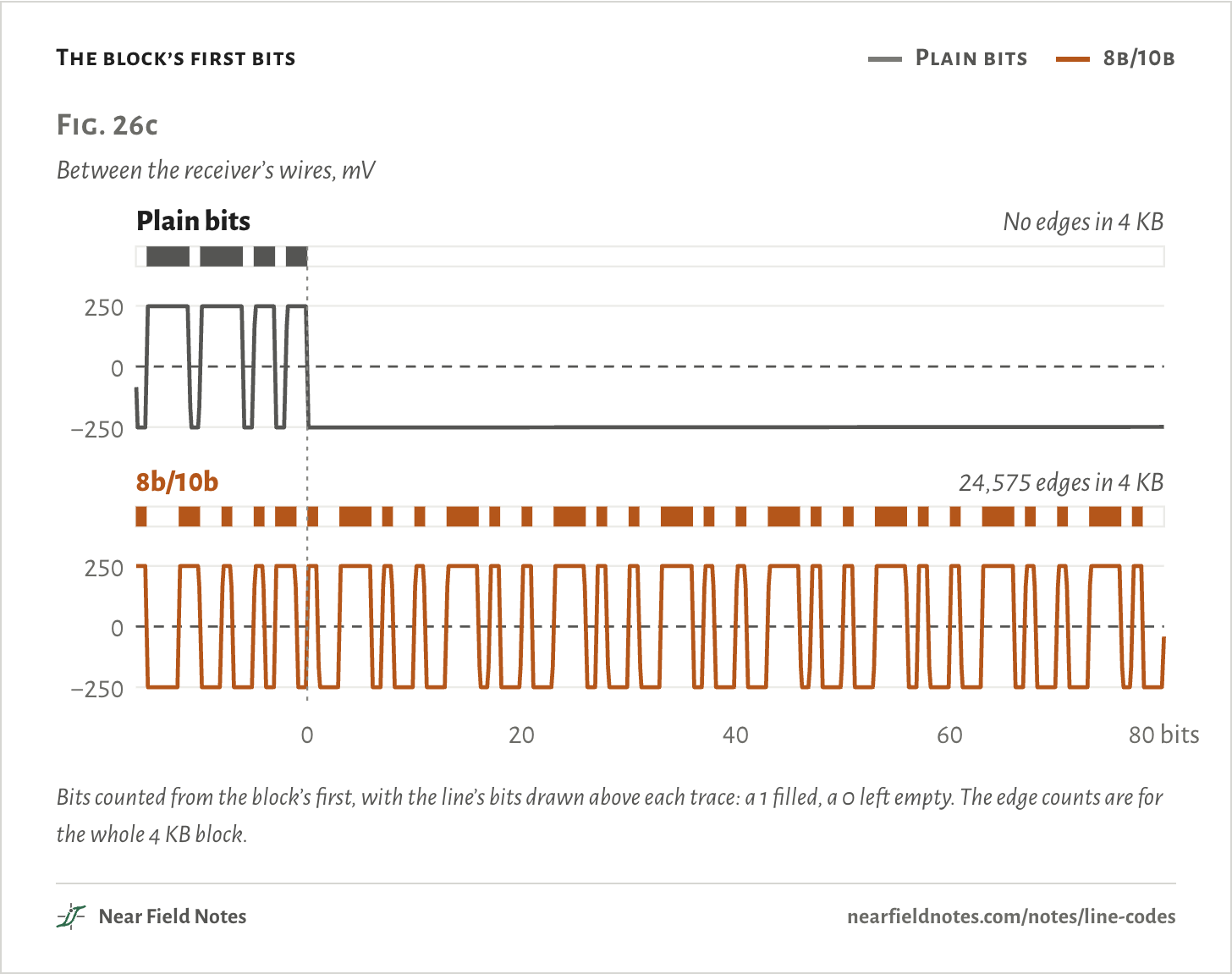
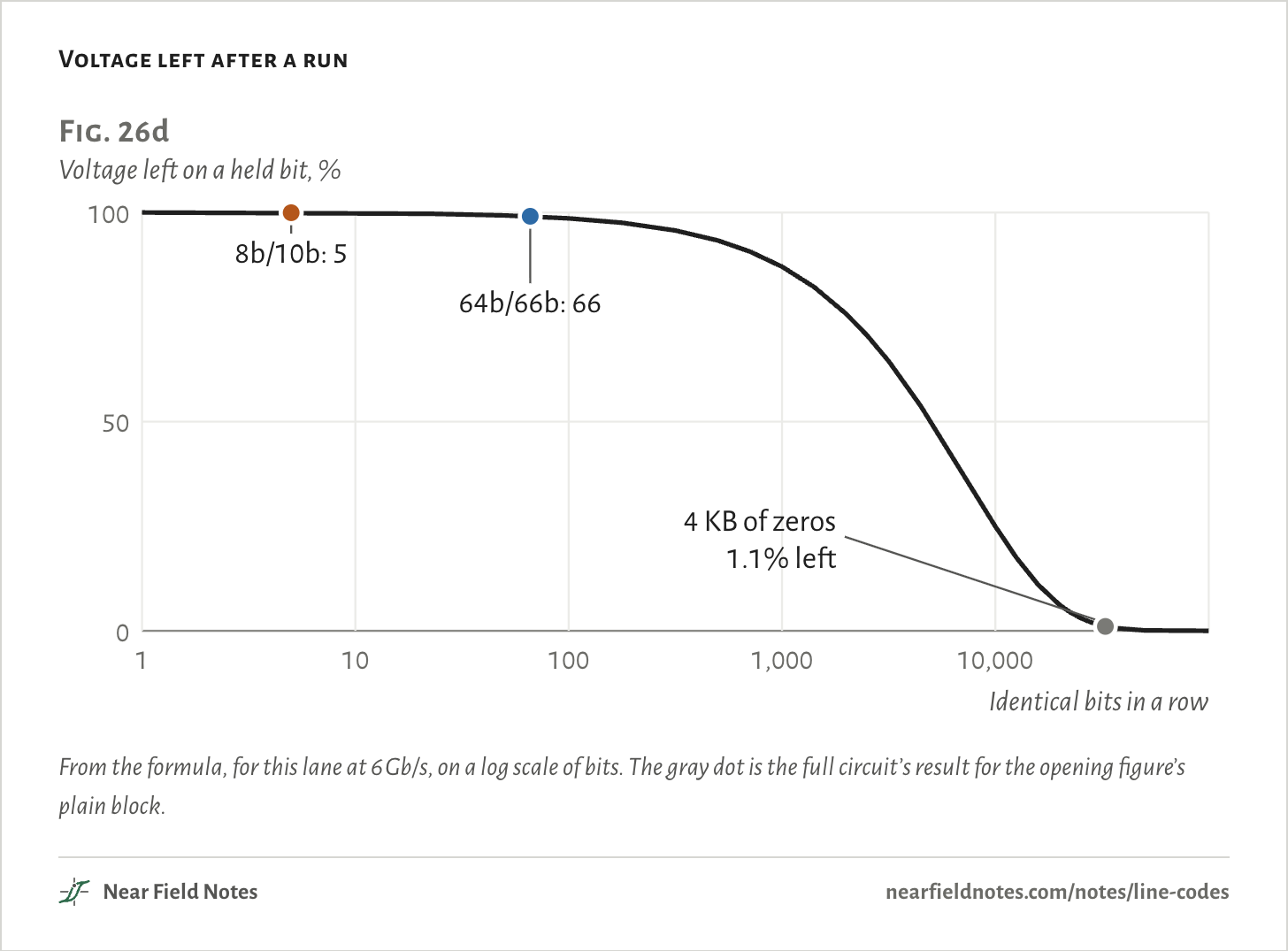
Range. The longest run of equal bits is 5, and the count of 1s minus 0s stays inside a band 6 wide. A fifth of the line carries no data.
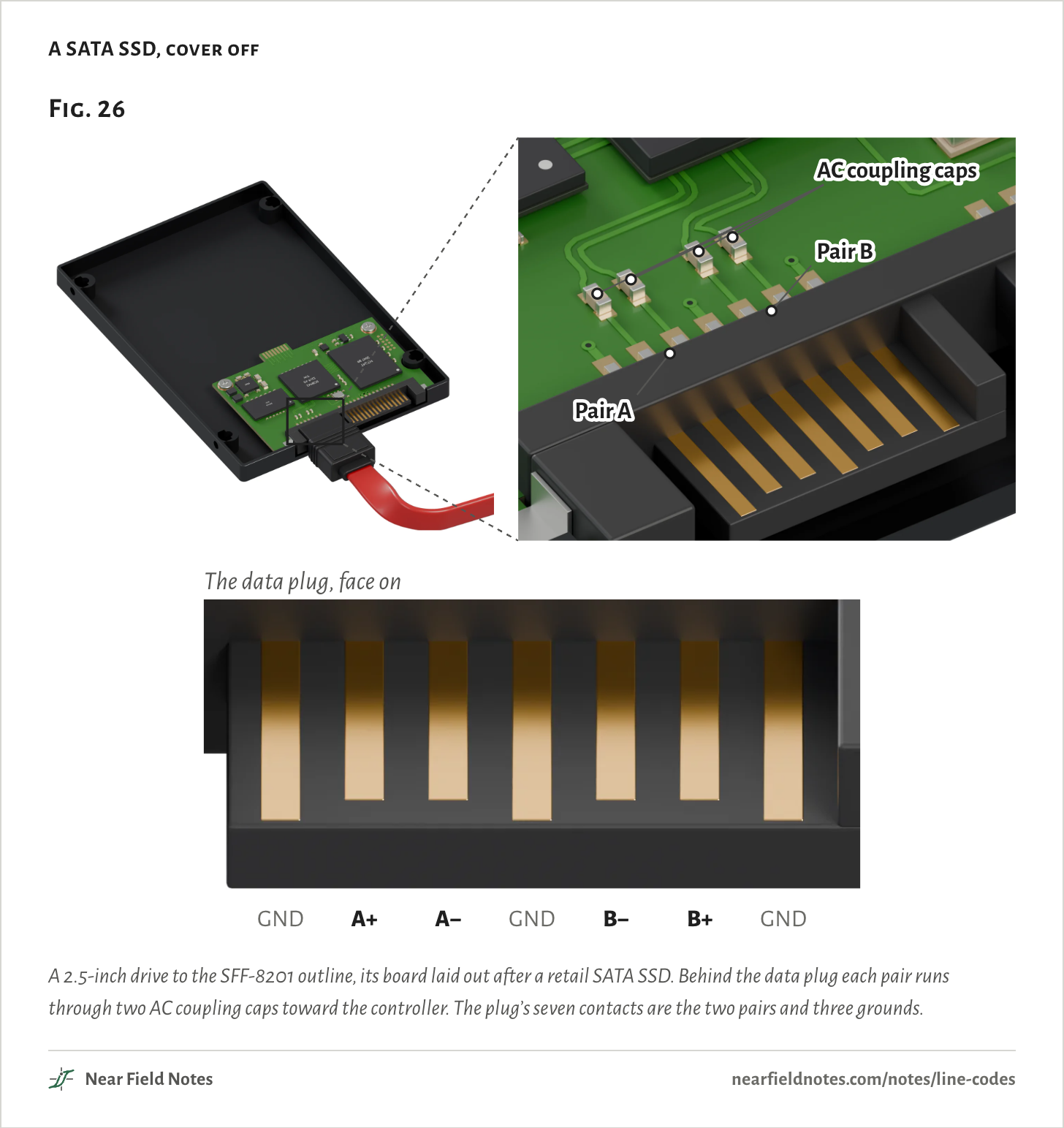
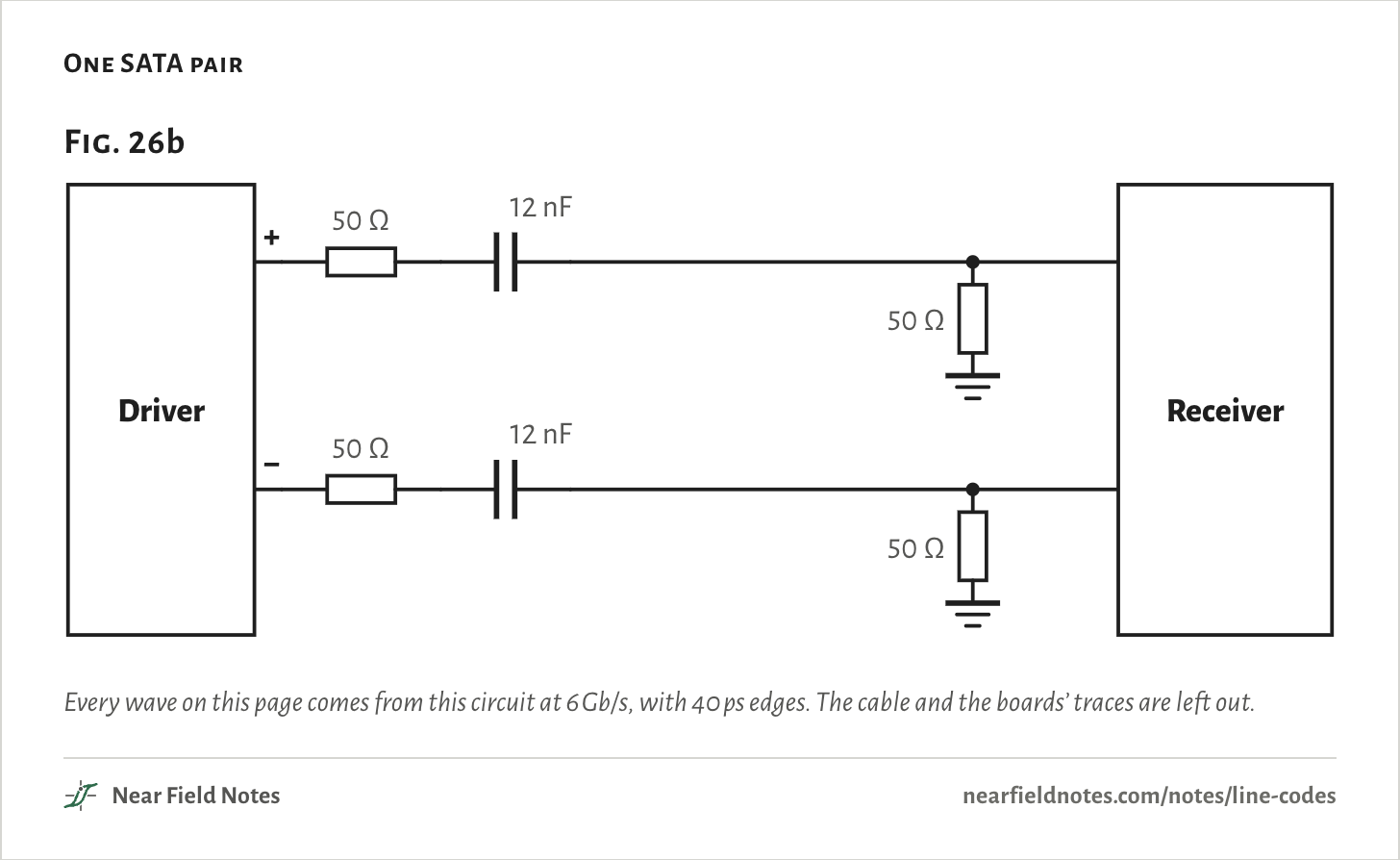
Habitat. SATA at 1.5, 3 and 6 Gb/s, USB 3.0, PCIe 1.x and 2.0, 10G Ethernet’s XAUI, Fibre Channel up to 8GFC and DisplayPort 1.x. SATA scrambles its data before coding it, to spread its emissions.
501